 01
18 m in the trees
Manyara Treetop Walkway
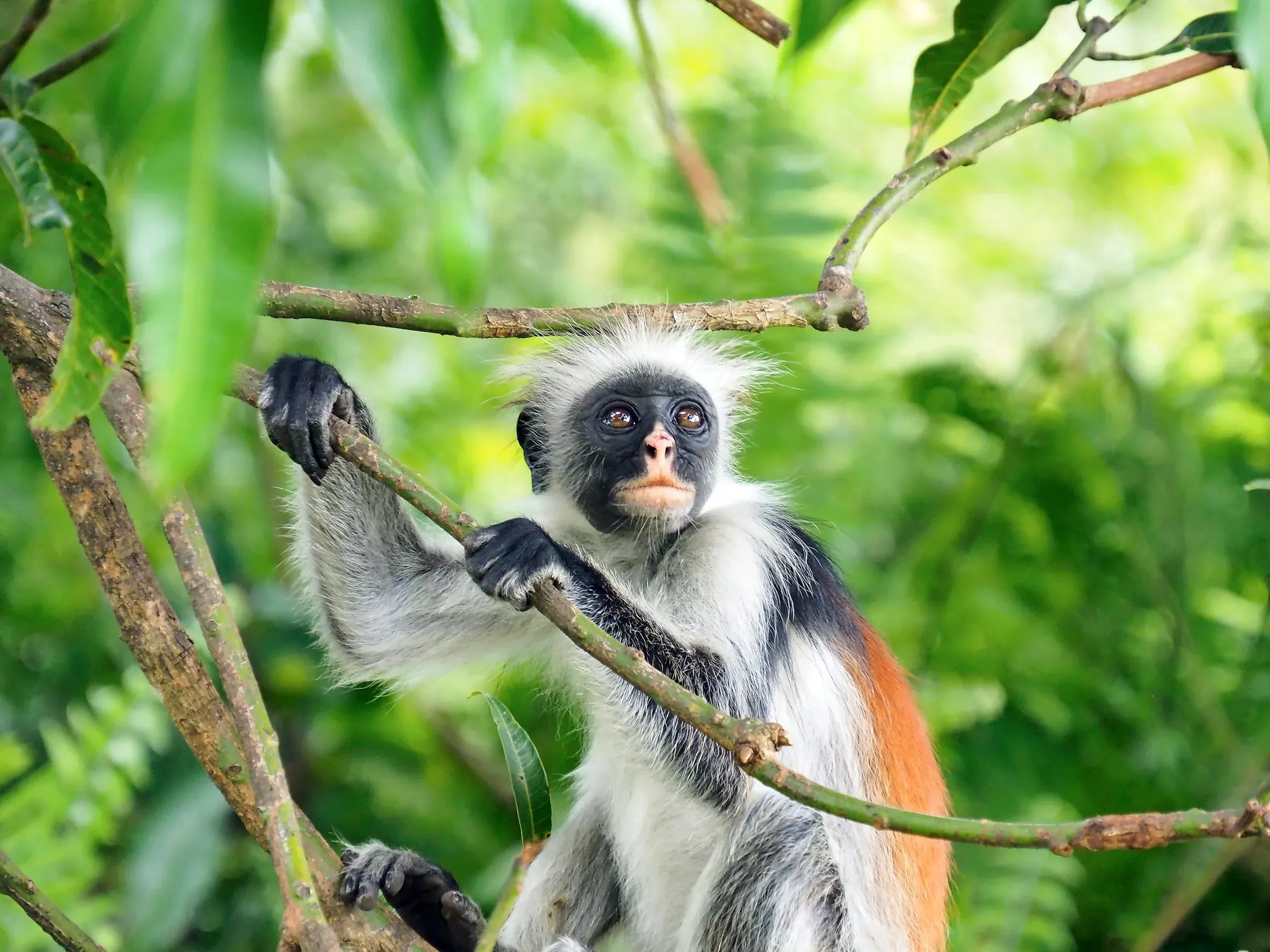
Walk 370 metres across nine suspension bridges high in the groundwater forest canopy, eye-to-eye with blue monkeys, butterflies, and hornbills.
Emerald groundwater forest beneath a 400-metre Rift Valley wall and alkaline flamingo shores
Ernest Hemingway called Lake Manyara “the loveliest I had seen in Africa.” Tucked against the rusty cliffs of the Great Rift Valley escarpment, it packs five distinct habitats — from jungle-like fig forest to shimmering soda flats — into a single scenic drive.
Lake Manyara National Park spans roughly 330 km² (expanded with southern Marang forest reserves to 648 km²) between the Great Rift Valley escarpment and shallow alkaline Lake Manyara, 126 km west of Arusha. Gazetted in 1960 and named a UNESCO Biosphere Reserve in 1981, it is renowned for tree-climbing lions, huge olive baboon troops, elephants, and 400+ bird species.
Manyara comes from the Maasai word emanyara (Euphorbia tirucalli), a spiky succulent hedge traditionally planted around family homesteads and cattle corrals.
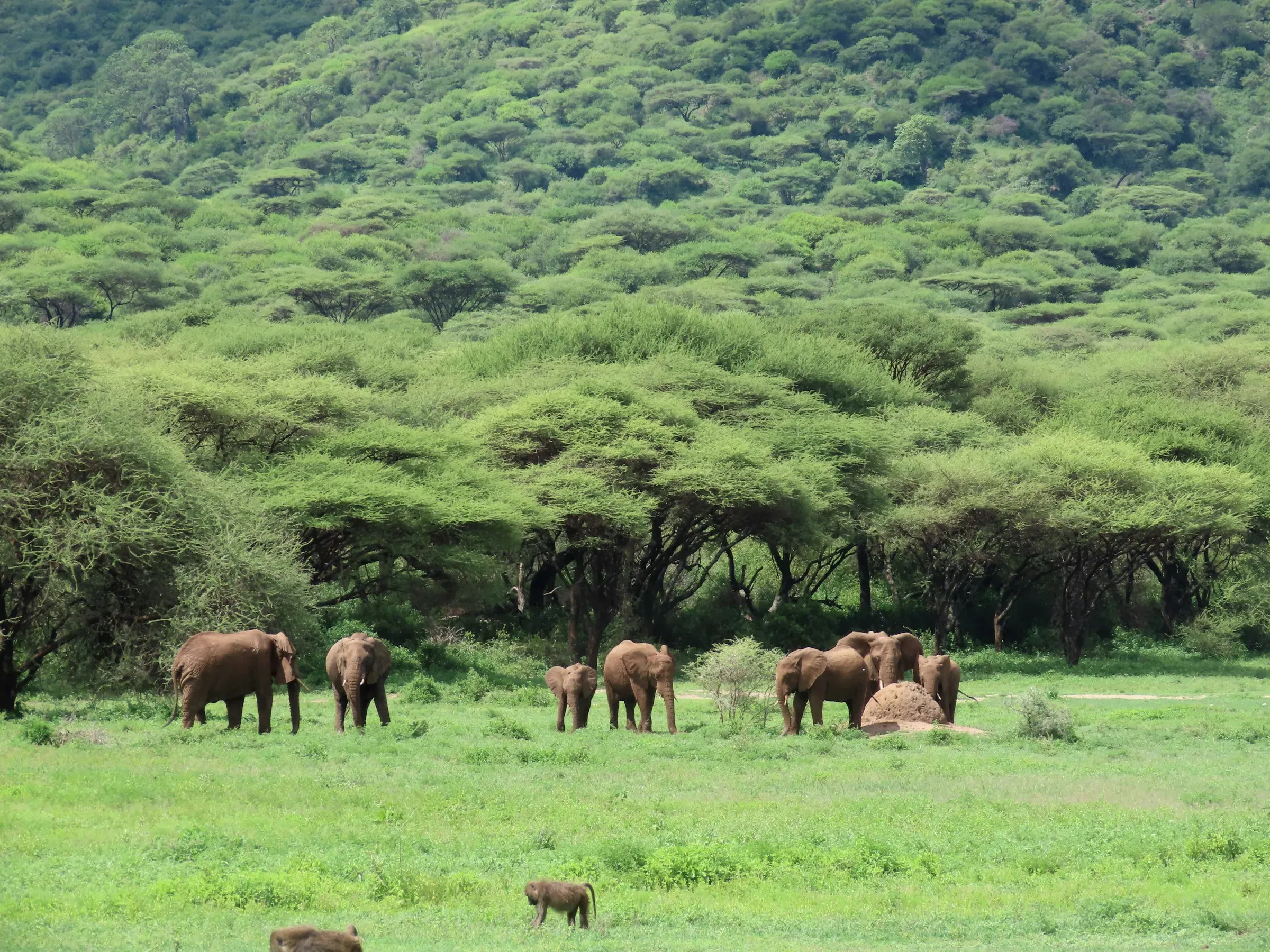
Underground springs filtering down through porous volcanic rock at the foot of the Rift Wall feed a permanent rainforest right beside dry savanna and alkaline mudflats.
| Habitat zone | Landscape character | Signature sightings |
|---|---|---|
| 1. Groundwater Forest | Towering mahogany, wild fig, and fever trees fed by crystal springs right inside the northern gate. | 150-strong olive baboon troops, blue monkeys, silvery-cheeked hornbills, bushbuck, and forest elephants. |
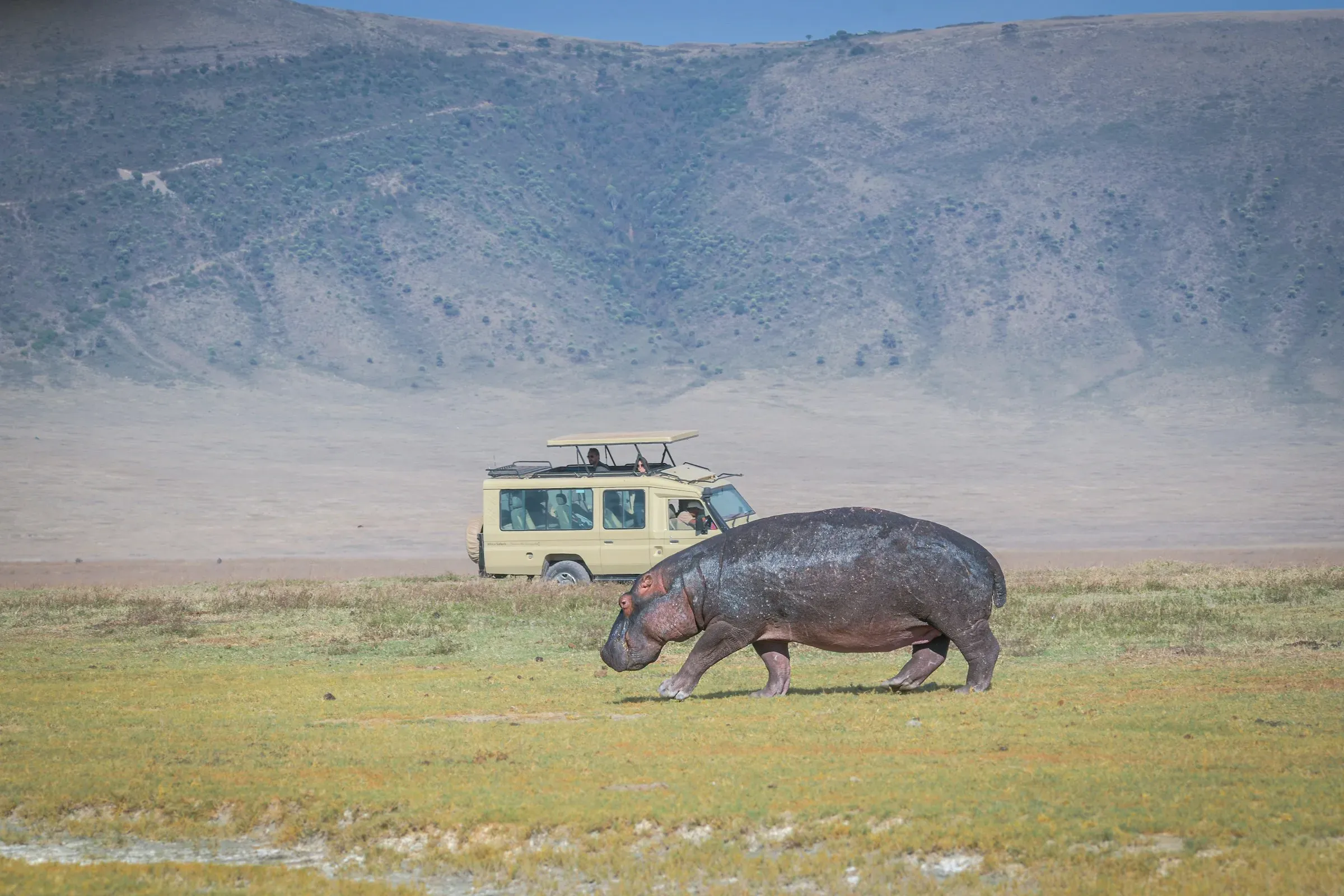
| 2. Floodplain & Marsh | Open sedge meadows and Simba River hippo pools emerging out of the trees. | Hippos, Cape buffalo herds, yellow-billed storks, herons, and African spoonbills. |
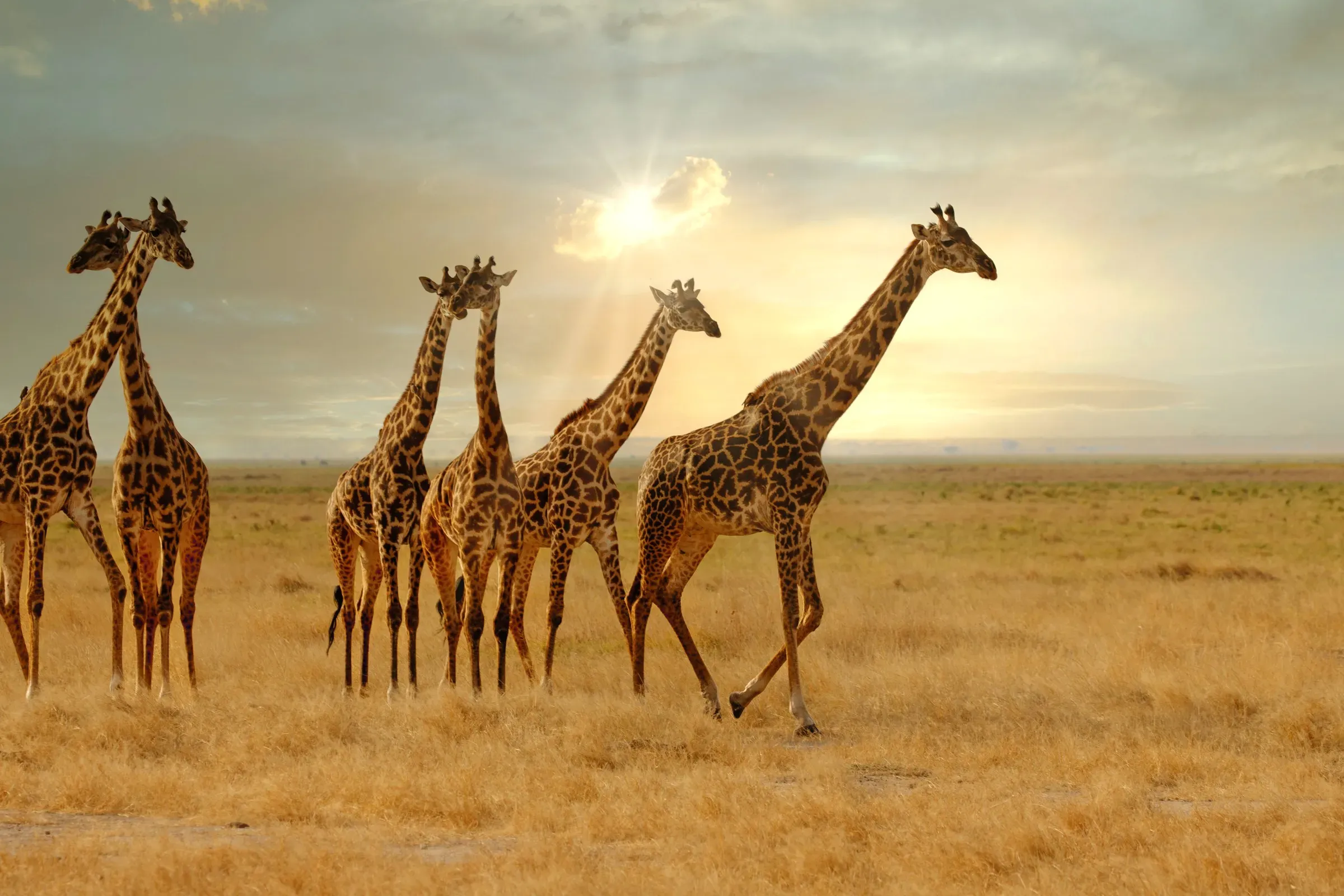
| 3. Acacia Woodland | Broad-canopy umbrella thorn acacias along the middle strip of the park. | Famous tree-climbing lions resting 3–6 metres off the ground, plus Masai giraffes and impala. |
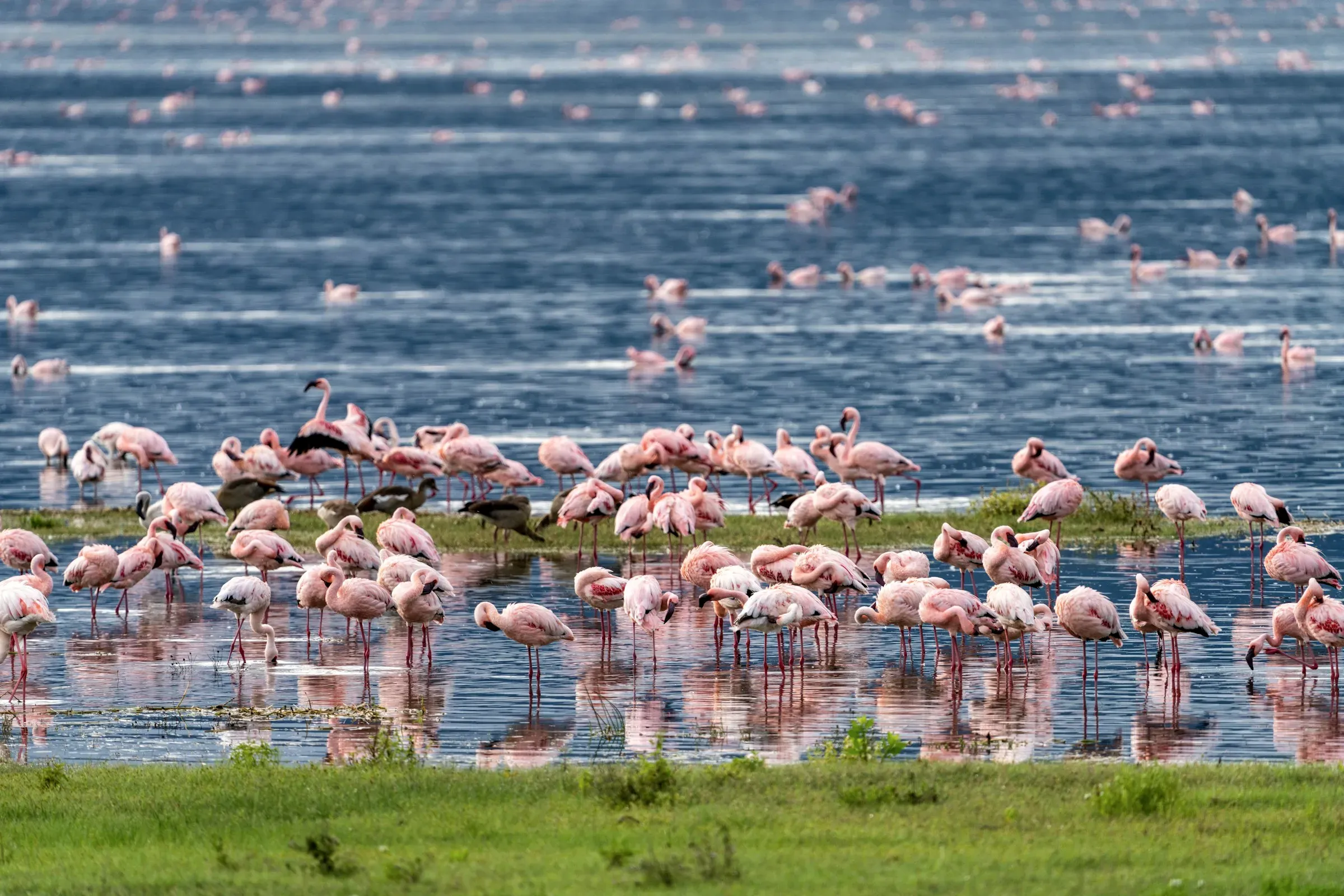
| 4. Alkaline Soda Shore | Mineral-rich shallows whose shoreline expands and shrinks with annual rainfall. | Seasonal flocks of lesser flamingos, great white pelicans, stilts, and waders. |
| 5. Maji Moto Hot Springs | Geothermal sulphur springs (~60 °C) bubbling out beneath rocky Rift cliffs in the far south. | Klipspringers on boulders, dwarf mongoose, and sweeping views up the 400 m Rift escarpment. |
Manyara packs several active experiences right at the start or end of a Northern Circuit itinerary — ideal for families or travellers breaking up road days.
01Walk 370 metres across nine suspension bridges high in the groundwater forest canopy, eye-to-eye with blue monkeys, butterflies, and hornbills.
02Explore the forest and hippo marshes after dark with a park ranger to spot grazing hippos on land, genets, bushbabies, porcupines, and prowling leopards.
 03
Right outside the gate, vibrant Mto wa Mbu brings together 120 Tanzanian tribes — tour red-banana plantations, rice paddies, Makonde woodcarvers, and a local home lunch.
Lake Manyara made tree-climbing lions world-famous through Iain Douglas-Hamilton’s elephant studies and early wildlife films. Lions still lounge in acacias here, though dense forest and rising lake water in recent wet years mean they take patience to spot.
Census data reference: UNESCO Man and the Biosphere & Britannica — Lake Manyara ↗
Right inside the northern groundwater forest — Africa’s largest baboon troops.
Forest clearings, the Simba River hippo pool, and grassy floodplains.
Over 50 species in a single morning along the boardwalks and lake edge.
Abundant when salinity and algae bloom; scarce when heavy rains dilute the lake.
Central acacia belt south of Msasa River; also check Central Serengeti for daily lions →
Sighting ratings reflect our Arusha guides’ field experience across seasons, not a guarantee — wild animals move freely.
Spring-fed forest keeps Manyara green all year. Note that seasonal canoeing only operates when lake levels sit within safe bounds.
Thinner bush improves visibility for elephants, buffalo, giraffes, and acacia-resting lions.
Palaearctic migrants join resident storks, pelicans, and kingfishers; waterfalls stream down the Rift cliffs.
Southern tracks toward Maji Moto can close temporarily after heavy downpours, though the northern forest loop stays accessible.
Lake Manyara’s gate at Mto wa Mbu is an easy 126 km (2-hour) tarmac drive west of Arusha, and just 30–45 minutes below the highland town of Karatu — right on the main road to Ngorongoro and the Serengeti.
Lake Manyara Airstrip sits atop the Rift escarpment above the park, receiving daily flights from Arusha, Zanzibar, and all major Serengeti airstrips.
Zoologists attribute tree-climbing to three practical benefits: escaping biting tsetse and stable flies in damp grass, catching cooler breezes above the ground, and scanning herds across tall sedge and shrubs.
Flamingo numbers rise and fall with water depth and blue-green algae levels. When heavy rains raise the lake and dilute salinity, flocks shift to neighbouring Rift Valley soda lakes like Lake Natron or Ngorongoro’s Lake Magadi.
Yes — children aged 6 and above (accompanied by an adult) can walk the netted suspension bridges, making it one of the best family activities on the Northern Circuit.
Guided 2.5-hour canoe safaris operate seasonally when water depth and shoreline conditions are safe; we confirm current availability with park rangers right before your trip.
From Manyara’s gate at Mto wa Mbu, you climb the scenic Rift Valley wall to Karatu in 30 minutes and reach Ngorongoro’s Loduare Gate in roughly 45 to 60 minutes total.
Road distances, seasonal windows, and sighting notes come from our own Arusha guides on the ground. Last reviewed November 2026.