 01
2 to 4 hours on foot
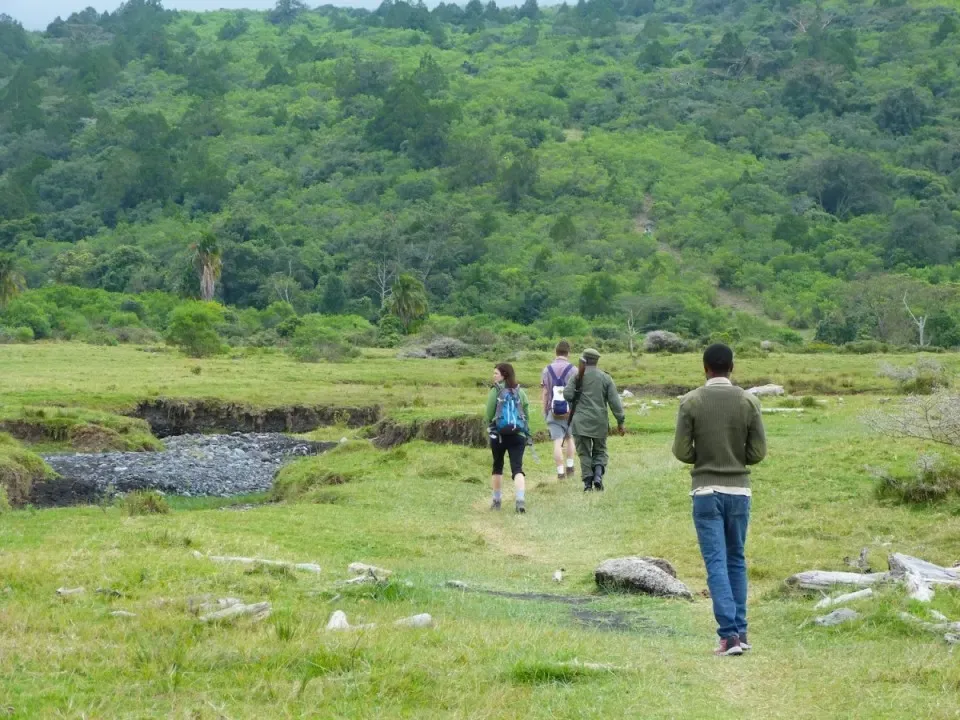
Armed-Ranger Walking Safari
Hike across open glades to Tululusia Waterfall and into Meru’s horseshoe caldera, tracking giraffe, zebra, bushbuck, and buffalo at eye level.
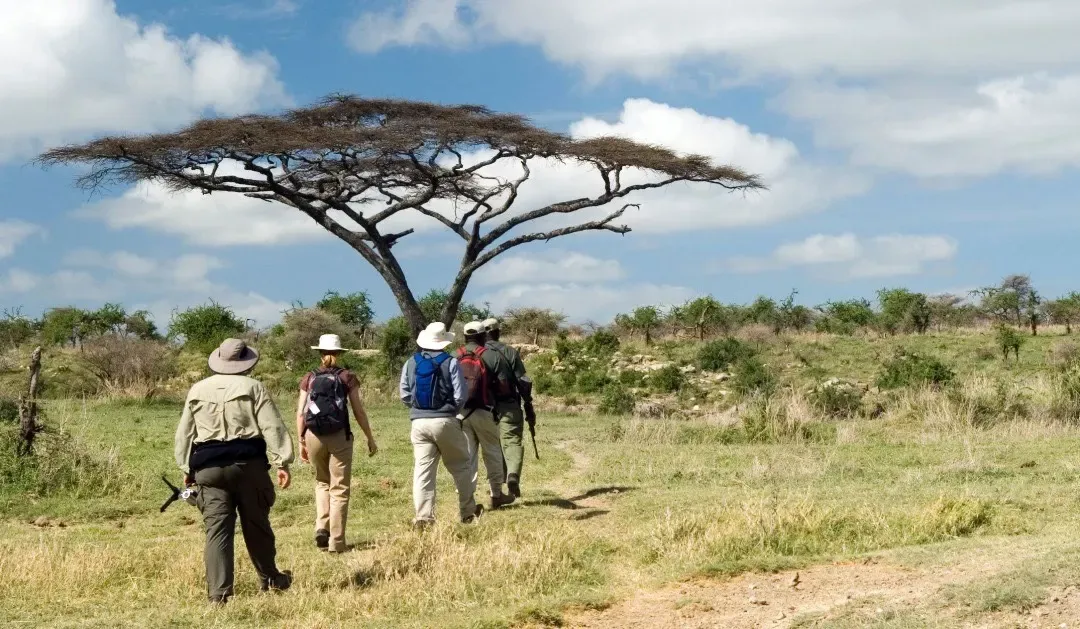
Walking safaris, alkaline Momella canoeing, and black-and-white colobus monkeys below Mount Meru
Just 45 minutes from both Arusha town and Kilimanjaro International Airport, this emerald jewel swaps crowded lion radio queues for walking on foot past giraffes, paddling canoes beside hippos, and watching acrobatic colobus monkeys under Mount Meru’s 4,566 m cliffs.
Arusha National Park protects 552 km² of volcanic craters, mossy cloud forest, and seven alkaline Momella Lakes between Mount Meru (4,566 m — Tanzania’s second-highest peak) and Mount Kilimanjaro. Established in 1960, it has no lions, making it northern Tanzania’s safest and most scenic park for ranger-led walking safaris, canoeing, and acclimatisation hikes.
Named after the Wa-Arusha agriculturalists of Mount Meru’s fertile southern foothills, the park compresses savanna, crater swamp, bamboo zone, heath, and alpine rock into a single skyline.
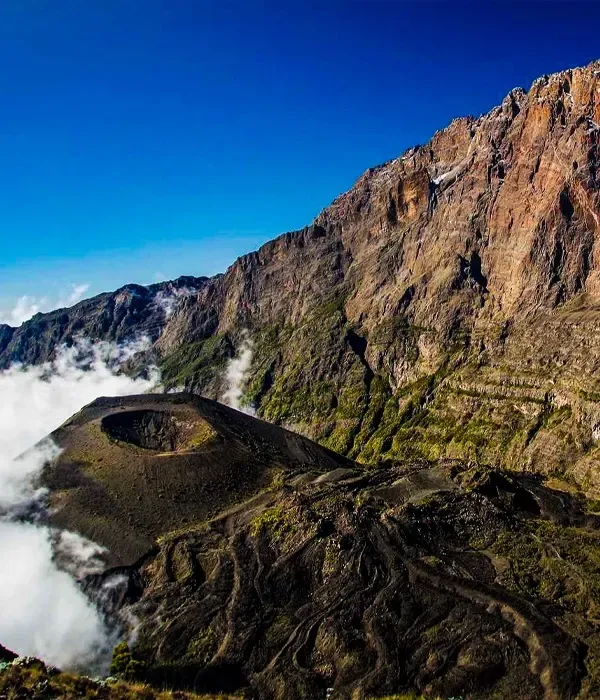
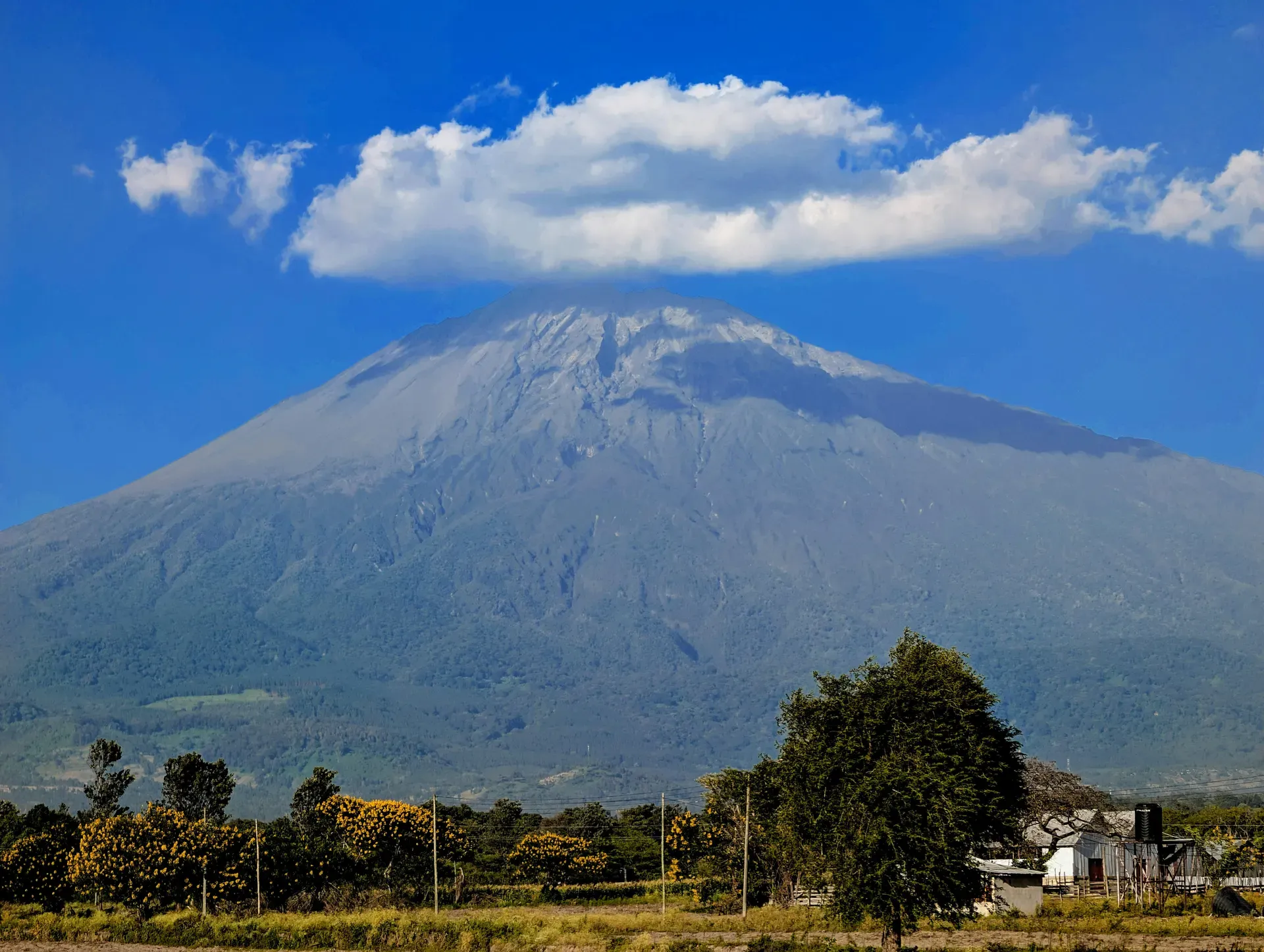
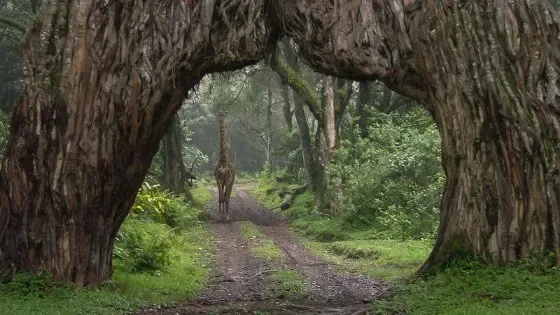
Because elevation climbs more than 3,000 vertical metres inside park boundaries, a single day takes you through habitats that feel hundreds of kilometres apart.
| Park sector | Elevation & terrain | What you do and see |
|---|---|---|
| Momella Lakes | 1,500 m · Seven shallow spring-fed alkaline lakes in ancient volcanic debris | Canoe Small Momella Lake past hippos and waterbuck; watch lesser and greater flamingos plus snowy Kilimanjaro views on clear mornings. |
| Ngurdoto Crater | 1,850 m rim · 3.6 km-wide forested caldera (“Little Ngorongoro”) | Walk rim viewpoints overlooking a marshy crater floor closed to vehicles where buffalo, warthogs, and elephants graze undisturbed. |
| Mount Meru Slopes & Ash Cone | 1,600 m to 4,566 m · Fig archways, Tululusia waterfall, and sheer 1,500 m inner cliffs | Walk with an armed ranger across alpine meadows with giraffes and buffaloes, or trek 3–4 days to Socialist Peak as a Kilimanjaro warm-up. |
After an overnight international flight into Kilimanjaro Airport, stretching your legs on foot or with a paddle beats sitting immediately for six hours on a highway.
01Hike across open glades to Tululusia Waterfall and into Meru’s horseshoe caldera, tracking giraffe, zebra, bushbuck, and buffalo at eye level.
02Glide silently in two-person stable kayaks across Small Momella Lake alongside wading waterbuck, reedbuck, cormorants, and distant hippos.
03Sleep in comfortable mountain huts (Miriakamba and Saddle) and walk a dramatic knife-edge crater rim at sunrise looking straight across at Kilimanjaro.
Arusha National Park is not a Big Five destination — lions and rhinos are absent, and elephants keep mainly to thick bamboo and forest — which is precisely why its primates, antelopes, and birds thrive so close to visitors.
Census data reference: Encyclopaedia Britannica & TANAPA — Arusha National Park ↗
Serengeti Ndogo meadows right past Ngongongare Gate and around Momella.
Leaping with flowing white tail plumes in mossy forest around Ngurdoto Museum and Fig Tree Arch.
Forest clearings, Kitoto viewpoint road, and Ngurdoto Crater floor.
Big Momella and Rishateni alkaline lakes, especially October to April.
Dense montane forest on Meru’s slopes; pair with Tarangire and Serengeti for big cats →
Sighting ratings reflect our Arusha guides’ field experience across seasons, not a guarantee — wild animals move freely.
Paved and gravel tracks stay open all year. Choose dry months if summit views and Mount Meru trekking are your top priority.
Warm, crisp mornings give the sharpest twin views of Mount Meru and snow-capped Kilimanjaro, plus peak migrant waterbirds on Momella.
Dry forest trails for walking safaris and Mount Meru climbs; pack a fleece for cool highland mornings.
Emerald cloud forest, roaring waterfalls, blooming wildflowers, and solitary trails.
Ngongongare Gate sits just 32 km east of Arusha city centre (40–45 minutes via Usa River) and roughly 35 km north-west of Kilimanjaro International Airport (JRO).
That proximity makes Arusha National Park effortless as an arrival-day warm-up, a final-day safari before an evening KLM/Qatar flight out of JRO, or a 3-to-4-day Mount Meru acclimatisation climb right before Lemosho or Machame on Kilimanjaro.
No — lions do not inhabit Arusha National Park. Leopard and spotted hyena live quietly in the forest, and the absence of prides makes it one of the safest and most enjoyable places in East Africa to walk on foot with an armed TANAPA ranger.
Yes! Because the gate lies halfway between Arusha and Kilimanjaro International Airport (about 40–45 minutes from either), we often run a full day with a walking or canoe safari and drop you straight at JRO for an evening international departure.
Arusha National Park’s montane forest around Ngurdoto Crater and Fig Tree Arch is the single most reliable spot on the Northern Safari Circuit to watch guereza black-and-white colobus monkeys leaping through the canopy.
Mount Meru (4,566 m) is 1,329 m lower and shorter (3 or 4 days vs 6–9 days), with cosy wooden huts instead of tents, but summit night involves a steep, exposed volcanic ash ridge that hikers find exhilarating and a superb altitude rehearsal for Kilimanjaro.
Yes — on clear early mornings (especially December–February and June–October), Kilimanjaro’s snow-draped Kibo dome rises 70 km across the plains directly east of Momella Lakes and Meru’s Saddle.
Road distances, seasonal windows, and sighting notes come from our own Arusha guides on the ground. Last reviewed November 2026.